
Most destinations measure success in arrivals. Aitutaki has started measuring it in ownership. On this small Cook Islands atoll, roughly 97% of tourism businesses are in local hands, and the island's leadership talks about pushing that figure to 100% the way other places talk about hitting record visitor counts. To the people steering Aitutaki's future, the headline number is not how many tourists land each year, it is how much of the money they spend stays with the families who live here.
That priority is written into a long-term blueprint, a 30-year community plan called Te Papa Tau o Araura, drawn up about four years ago. It took shape during the pandemic, when the island's tourism operators, large and small, suddenly had time to weigh what had been working and what had not. The plan that emerged rests on a few stubborn principles. One is captured in a phrase the island uses for itself, "Aitutaki for Aitutaki": the idea that residents own both the successes and the failures of their tourism economy. Another is that no one gets left behind, which in practice means growth is paced so that ordinary families can keep up. Move too fast, the thinking goes, and the gap between those who profit and those who don't widens into social tension.
The tools for managing that pace are unromantic but effective: licensing and caps. The island limits the number of lagoon operators and the number of hotel rooms, deliberately spreading opportunity across many households rather than concentrating it in a few large hands. Boats face licensing requirements, and some areas are kept for tourism while others are reserved for residents, so locals retain access to the land and lagoon that outsiders come to enjoy. Running through every decision is a single, almost philosophical question that the island keeps returning to: how much is enough?
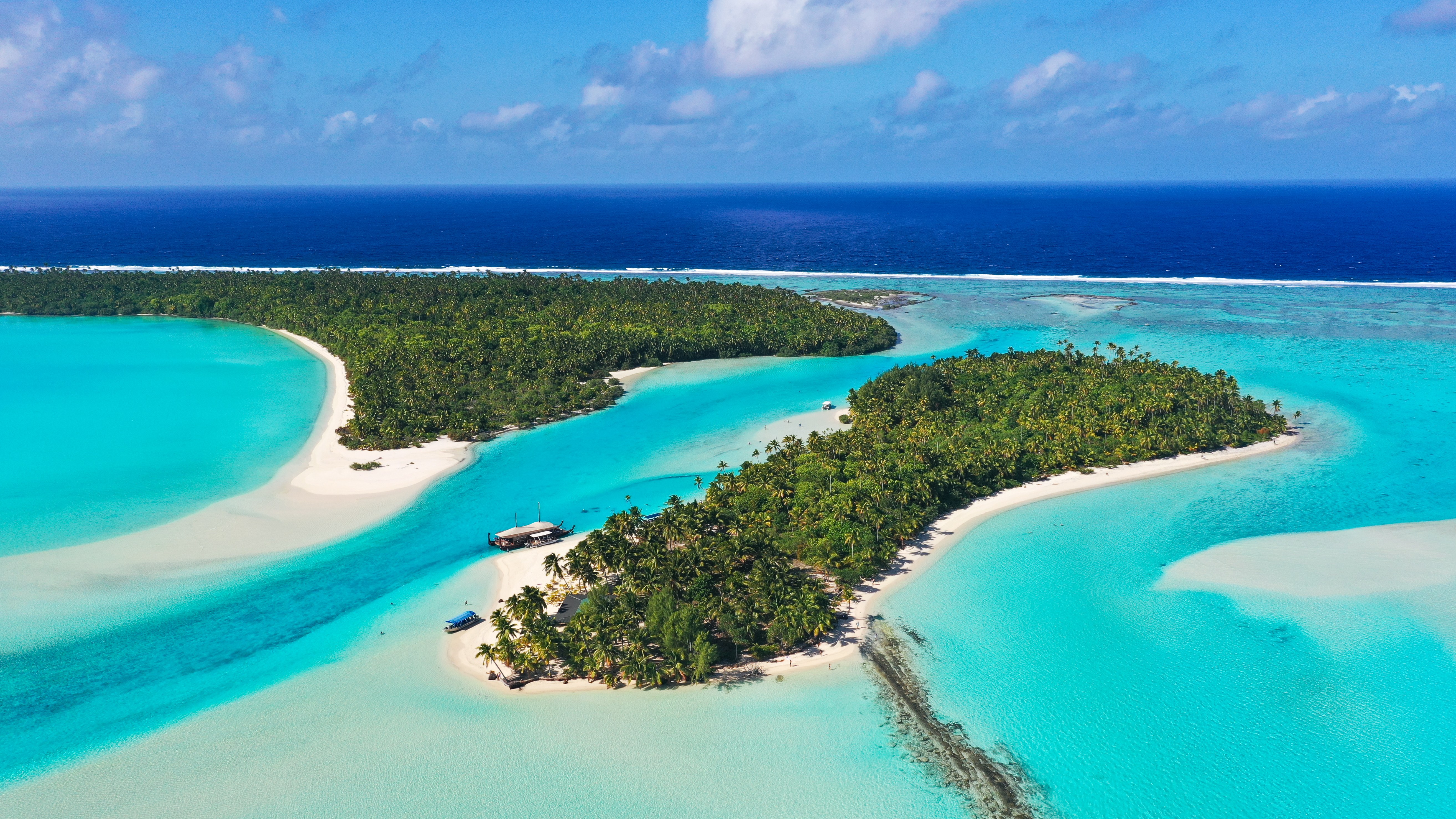
It is a question the wider Cook Islands is now asking, too. The country welcomed a record 175,757 visitors in the 2024/25 financial year, with tourism receipts of around US$273.4 million (NZD$473.5 million) and tourism accounting for well over a third of the national economy. Yet the national tourism office has openly concluded that arrivals alone are no longer the right measure of success, and is shifting toward a model it describes as value over volume, higher-yield visitors, longer stays, benefits spread more evenly across islands and seasons. Aitutaki, in many ways, has been living that philosophy for years.
Part of what makes the approach work is a wariness about who owns the island's beds. Local leaders are openly cautious about absentee ownership and the holiday-home market, for a straightforward reason: profits earned by owners who live elsewhere tend to leave with them. People who actually live on Aitutaki, by contrast, are accountable to their neighbors. The same logic explains why the island insists that public policy, not unchecked private investment, set the direction. Let investment lead without guidance, the island's leadership warns, and you risk losing public access to the very places that make the destination special.
None of this is framed as a new idea. The island's leaders point out that sustainable resource management is older than tourism here by a thousand years, embodied in raui, the traditional practice of closing off an area or protecting a species when it needs time to recover. Today's language of regenerative tourism, in other words, describes something Aitutakians have practiced for generations. That continuity gives the island's stewardship a credibility that marketing slogans elsewhere often lack.
.jpg)
Of course, restraint is easier to preach than to fund, and Aitutaki's ambitions run straight into the hard limits of being a remote island. Energy and water sit at the top of the list. Leaders want to push the island toward a solar capacity well beyond its current needs to cut its dependence on imported fuel, an effort begun nearly a decade ago, though delays mean some of the technology is already dated. Water is its own story: the island has discovered abundant natural drinking water with ideal fluoride levels, a genuine public-health advantage, but it still needs the infrastructure to distribute it properly. An upgraded harbor, essential to both resilience and the economy, is also on the agenda. Everything on a remote atoll runs on longer timelines, supplies are stocked in months, not days, and that reality, the island notes, breeds a certain self-reliance.
Where the plan looks furthest ahead is in who it wants to bring home. Aitutaki's leaders argue that future partnerships should make room first for returning Aitutakians and other Cook Islanders living abroad, creating space for the diaspora to come back and invest. Build too fast with outside money, they caution, and you risk shutting your own people out of the economy they would otherwise inherit. It is a notably different pitch from the usual courtship of foreign capital.
.jpg)
Then there is the longer horizon still: the seabed. The waters of the Cook Islands hold significant mineral wealth in the form of nodules, and the island's leadership views the opportunity with a mix of interest and caution. The decisive question, again, is not whether the minerals can be extracted but how much the country actually needs. Managed responsibly, leaders suggest, such resources could fund world-class healthcare and education; but only if the Cook Islands remains a genuine partner across the entire value chain and environmental impacts are kept to a minimum. It is the same restraint that governs the lagoon, applied to the deep ocean.
What ties it all together is a refusal to treat tourism as something that simply happens to the island. On Aitutaki, it is something to be shaped, paced, and, when necessary, slowed, so that the people who call the place home remain its owners, its hosts, and its first beneficiaries. In an industry built on chasing more, an island that keeps asking how much is enough is making a quietly radical bet: that the surest way to protect paradise is to decide, in advance, what you are not willing to sell.


