
In the Cook Islands, an airport is never just an airport. Spread across 15 islands in roughly 772,000 square miles (2 million square kilometers) of the South Pacific, this nation of around 17,000 people depends on aviation the way other countries depend on highways. Visitors arrive by air. Goods move by air. Families separated by hundreds of miles of open ocean stay connected by air. When the planes are flying, the country is open for business. When they are not, almost everything else waits.
That is the lens through which Edward Herman, Chairman of the Airport Authority of the Cook Islands, and Joseph Ngamata, its Acting CEO, view their work. For them, the terminal at Rarotonga International Airport is less a piece of transportation infrastructure than the threshold of the entire nation.
"In the Cook Islands, the airport is essentially the front door to the country. It's how people arrive, how trade happens, and most importantly, how families and communities stay connected." — Edward Herman, Chairman.
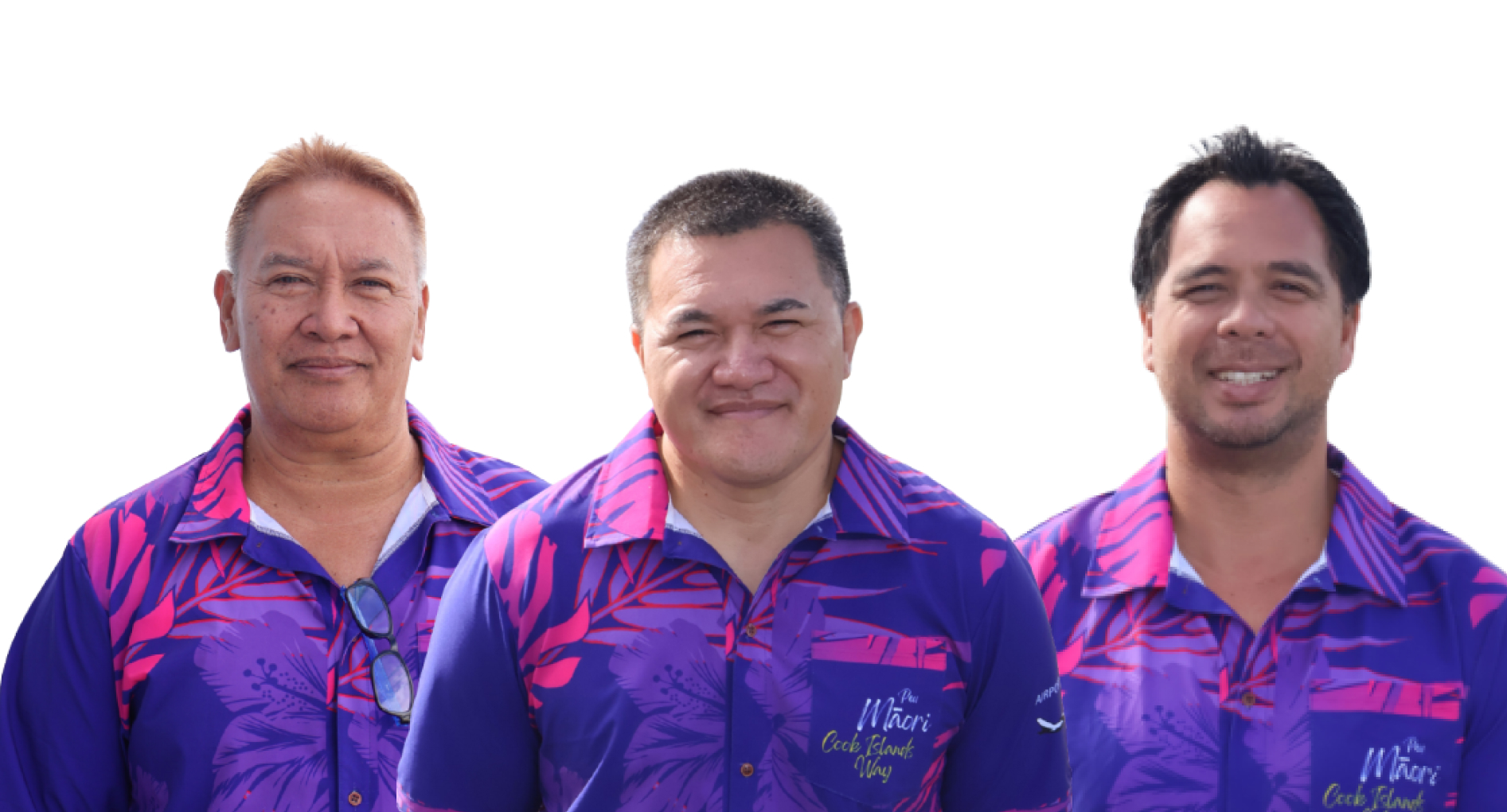
"Our role is straightforward but critical," Herman says. "We must keep that door open, operating efficiently and safely at all times. We are the gatekeepers, ensuring access while also striving to reflect our culture and identity through the gateway experience."
Ngamata puts the economic stakes more bluntly. "If flights stop, the economy stops. That's the reality," he says. "Airport operations are not just about aircraft, they are about livelihoods. The entire economy depends on connectivity." It is a dependence that shapes every decision the Authority makes, because in a small island economy there is little margin for disruption and no easy alternative when a link goes down.
The challenge facing the Authority is the welcome kind: growth. As tourism and trade expand, the airport has to expand with them, and the leadership is candid that the infrastructure is straining to keep up. "There must be strong alignment between economic growth and airport capacity," Herman says. "As tourism and trade expand, the airport must evolve alongside them. That creates challenges, but also shapes our long-term strategy."
Several modernization projects are now underway at once. The Authority is expanding the terminal to ease congestion and improve the passenger experience, while still, Herman is careful to note, showcasing Cook Islands culture rather than scrubbing it away in favor of generic airport sheen. It is upgrading safety infrastructure, extending runway end safety areas to meet evolving international standards, and planning to relocate the control tower so it can better manage larger and more frequent aircraft.
Of these, Ngamata singles out the terminal as the most pressing. "The terminal expansion is particularly urgent," he says. "Planning must look five to ten years ahead. If you already feel congestion, you're often behind." That forward-looking discipline runs through the Authority's master planning, which ties each infrastructure decision to specific traffic thresholds, both passenger numbers and aircraft movements.
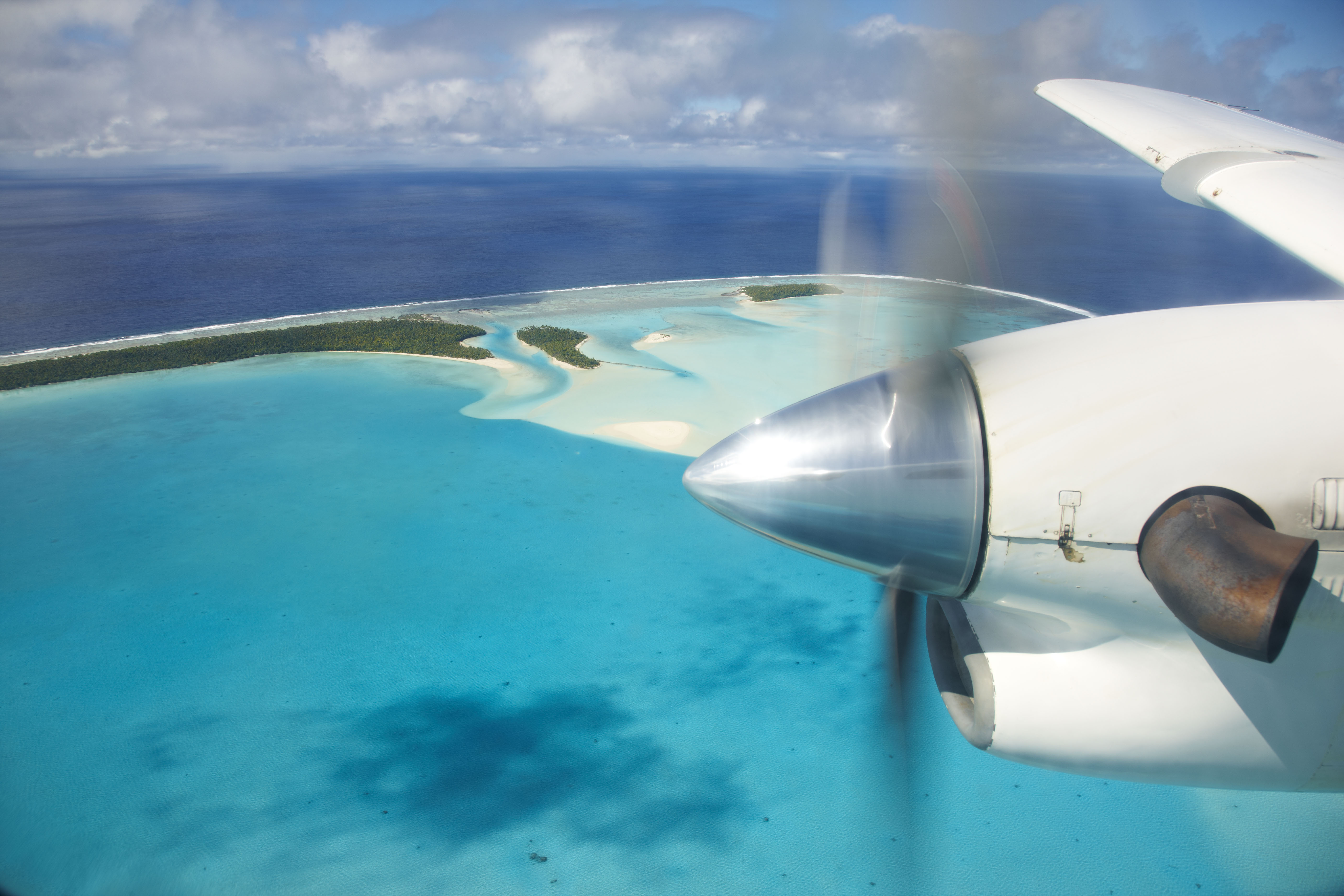
The pressure is already visible on the ground. Larger aircraft, including Boeing 787s and Airbus A321s, are arriving more frequently, and sometimes simultaneously, which strains the airport's apron capacity. "Flexibility is a key issue," Herman says. "Even small delays can disrupt operations because our infrastructure is limited. Domestic and international operations also share space, which adds complexity." The upgrades, he acknowledges, are essential, and they require significant investment.
For Herman and Ngamata, one route looms larger than any other: a direct connection to the U.S. mainland. "The U.S. connection is critical," Ngamata says. "It provides access not only to North America but also to Europe and beyond." Today, the only nonstop link between the United States and the Cook Islands runs from Honolulu, leaving California travelers to connect through Hawaii or Tahiti.
Re-establishing a direct route to Los Angeles, Herman says, "would be highly beneficial for tourism and economic resilience." While the final call rests with the government, the Authority sees itself as the enabler. "Strategically, we strongly support U.S. connectivity," he says. "The airport plays a key role as the gateway." For a destination still relatively unknown to American travelers, a direct West Coast link could be transformative.
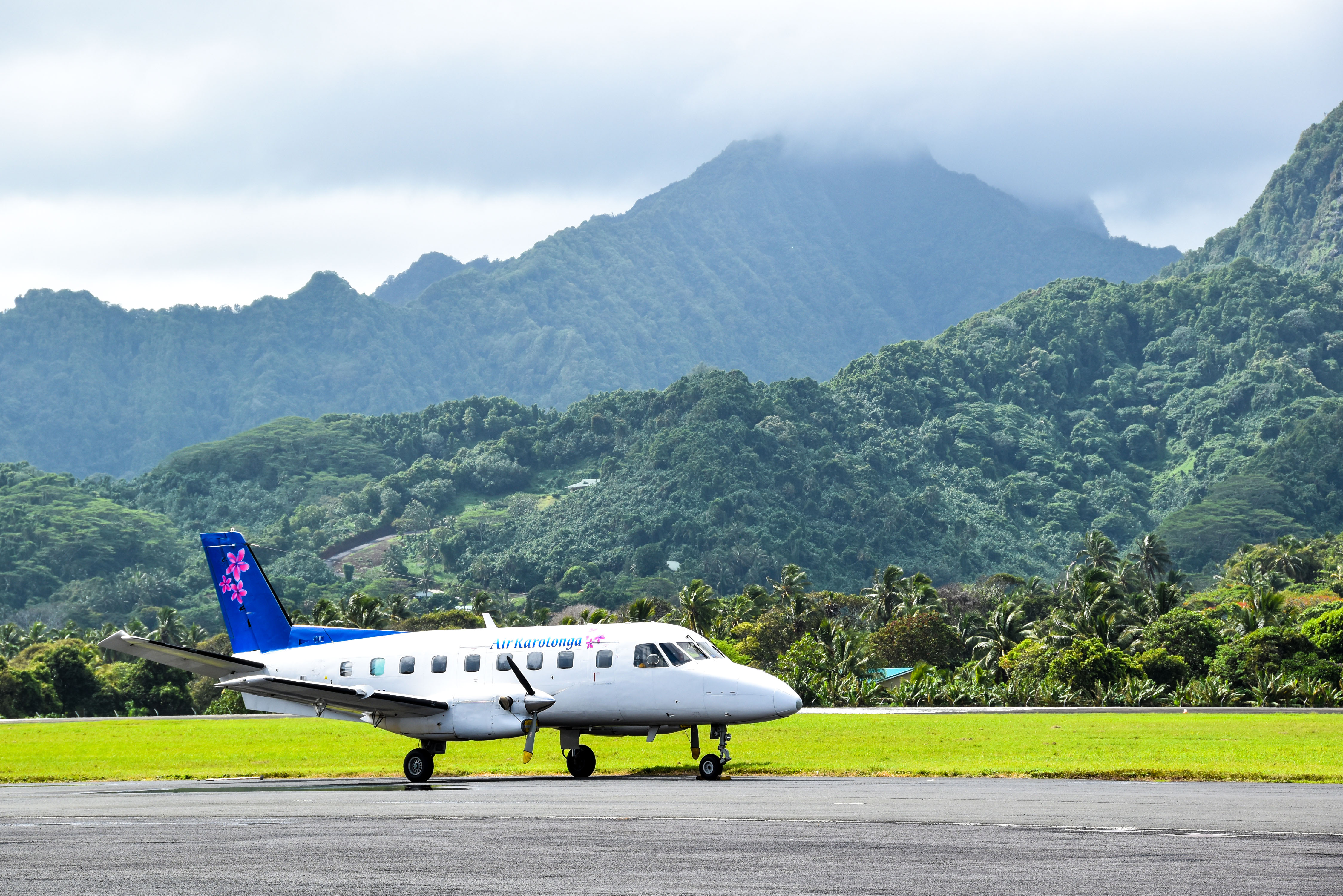
No account of Cook Islands aviation is complete without Air Rarotonga, the country's flag carrier. Founded in 1978 with a single Cessna, the privately owned airline has built nearly half a century of uninterrupted service into the connective tissue of the nation. From its hub at Rarotonga International, its Saab 340B+ turboprops and Embraer Bandeirantes link the capital to the scattered islands of the Southern and Northern Groups, some with short, unpaved strips that larger aircraft cannot touch, while a Cessna Citation jet handles charters and the occasional medical evacuation. Air Rarotonga carries tens of thousands of passengers a year and also flies internationally to Tahiti, knitting the Cook Islands into the wider Pacific.
Its role extends well beyond its own flights. Air Rarotonga is also the ground handler for the international carriers serving Rarotonga, including Hawaiian Airlines, the only airline operating a nonstop service between the United States and the Cook Islands, on its route from Honolulu. That makes the local airline a quiet but essential partner in the very U.S. connectivity the Authority is working to expand: every American visitor who steps off that Honolulu flight is met by Air Rarotonga's ground crews. In a market this small, such overlapping roles are not redundancy but resilience.
If growth is the opportunity, climate change is the existential threat, and at Rarotonga it is not abstract. "Our runway is close to the ocean, so storm surges are a real threat," Ngamata says. The Authority is strengthening coastal protection and hardening infrastructure to withstand increasingly severe weather. Sea-level rise is already affecting the airport's drainage systems, and the geography offers no easy fix.
"We cannot raise the airport, so we must innovate to manage water flow and protect operations. This will require long-term planning and global cooperation." — Edward Herman, Chairman.
On emissions, the Authority is working through environmental certification programs and has begun measuring its carbon footprint. It already runs a solar energy partnership and is exploring further renewables, including panels on terminal roofs and parking areas. But here, too, the constraints of a small island bite: limited land and strict aviation safety standards cap how far solar can expand.
Delivering all of this, in an era of shrinking donor funding, means rethinking how projects get financed. The Authority is exploring private-sector partnerships and innovative financing models, and Herman is emphatic that it cannot go it alone. "Partnerships, with airlines, government, investors, and regional stakeholders, are essential," he says.
Yet for all the talk of aprons and runway safety areas, both men return to something less tangible. "Investing in our airport is not just a financial decision, it's an investment in a culture and a people," Herman says. "While returns may not always be measured purely in financial terms, the social and cultural value is immense."
The message to readers in Los Angeles is, finally, an invitation. "You cannot truly understand it from afar, you have to experience it," Ngamata says. "The Cook Islands offer something genuinely unique in the Pacific." Herman agrees: every visitor, he hopes, leaves remembering the warmth, pride, and authenticity they found just beyond the front door.


