
On most Pacific islands, the biggest hotels carry names you already recognize. The Cook Islands took the opposite path. Of roughly 715 licensed properties on the books, only about 40 are classified as hotels and resorts; the rest are villas, holiday homes, and small lodges, and almost all of them, large or tiny, are owned by Cook Islanders or by operators who have made the islands their home. The private sector here isn't a cluster of franchises. It's a community of families and founders, each running a distinct kind of welcome.
Jerry Crump, group general manager of Island Hotels Limited, runs two of Rarotonga's larger properties and is candid about what sets them apart. "We're not an offshore chain parachuting a standardized product into a beautiful location," he says. "We're embedded here." His company splits the market deliberately: Edgewater Resort and Spa is the full-service family flagship, built for grandparents, parents, and children "creating memories across generations," while Club Raro Resort is an adults-only retreat for couples and independent travelers who simply want to switch off. Between the two, Crump says, the group covers the full spectrum of visitors to Rarotonga, and the destination's health and the company's are, in his words, "genuinely inseparable."

That sense of stewardship shows up most vividly in how operators treat their own people. Ani Thompson, chief operating officer of Pacific Resort Hotel Group, began her own career through a school work-experience placement at the company when she was 14. Today she oversees four beachfront properties across Rarotonga and Aitutaki under a philosophy she calls "simplicity with purpose," and she has resisted adding a single room in 18 years to protect the gardens, streams, and village around her flagship. What animates the stay, she says, is that "every department contributes to the guest experience," chefs cook alongside visitors, the engineering team leads activities, and one of the resort's most popular hosts is a mama who "barely speaks English" yet runs a beloved weekly flower workshop through gestures and smiles. The group now operates structured internships with Tereora High School, rotating students through every department. "Tourism," Thompson notes, "is much bigger than hotel jobs alone."
The middle of the market tells the same story from a different angle. Tere and Mike Carr bought Lagoon Breeze Villas out of receivership in 2011, reroofed it, added units, and rebuilt it into a 25-villa property they describe as "a place where guests can truly feel at home", spacious, affordable, and staffed entirely by locals. Set on four acres, it is pitched squarely at families and multigenerational groups who want room for children to roam safely. The Carrs believe the islands offer Americans "what Hawaii may have felt like 50 years ago," and they point to a quietly important trend: more Cook Islands families are now building villa accommodation on their own land, keeping tourism revenue, and young Cook Islanders, at home.
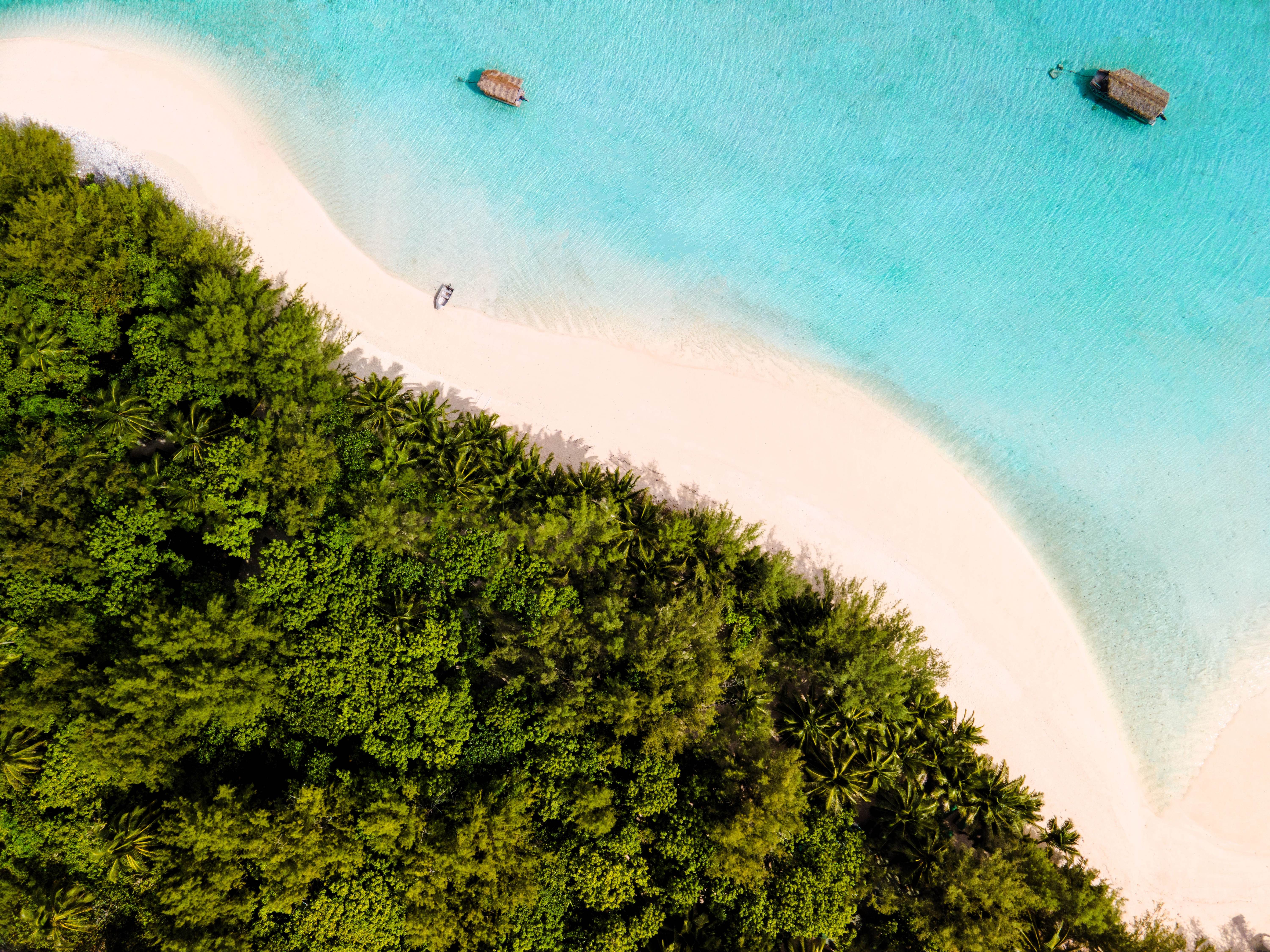
At the more ambitious end, two operators are stretching what the private sector can be. Tata Crocombe has built an integrated ecosystem around his Aitutaki Lagoon Private Island Resort and the Rarotongan Beach Resort, folding in tours, insurance, real estate, and the AI venture traveltech, while running coral-restoration programs with marine biologists on staff. "When you restore the reef, everything comes back," he says, pointing to a guest Net Promoter Score near 96 at Aitutaki as evidence that warmth, not scale, is the real product. Brett Baudinet, meanwhile, has opened what he bills as Rarotonga's first five-star resort, The Grand, securing full buyouts from a major U.S. luxury operator "before we even had doors on the building." His companion venture, Smartie, is a Pacific "super app" for transport, food, tours, and payments.
Liana Scott brings the widest lens of all. As general manager of Muri Beach Club Hotel and president of the Cook Islands Tourism Industry Council, she speaks for operators large and small, pressing the case that the smallest village lodge and the grandest resort must both hold to the same standard. "If I want my own businesses to succeed," she says, "the entire ecosystem has to succeed." That cooperative instinct runs deep: several operators describe deliberately stepping back from weddings, lagoon cruises, and cultural evenings as specialist local businesses emerged, choosing to refer guests onward rather than compete. Her pitch to visitors is refreshingly unpretentious: "You'll be treated like family, not a tourist."
.jpg)
Sustainability here is less a marketing program than a condition of survival, and the private sector has often moved ahead of regulation. Pacific Resort installed a sewage-treatment system in the 1990s and now turns garden waste into compost through a village association; Muri Beach Resort has run partly off-grid on solar for 13 years; The Grand powers its air conditioning entirely on solar; and Lagoon Breeze leans on the ancestral Raui system of temporary marine and land closures that let reefs and fish stocks replenish. "Protecting that," as Crump puts it, "is enlightened self-interest as much as it is conscience."
What unites this mosaic, family resorts and adults-only retreats, value villas and a first five-star, a super app and a coral nursery, is ownership that stays close to the ground and a hospitality that simply can't be franchised. California already sends the largest single share of the islands' North American visitors, and the operators here are betting that more will follow, drawn less by spectacle than by the increasingly rare feeling of being genuinely welcomed somewhere. "Kia Orana," Crump says, "is not a marketing line but a standard the team holds itself to every day."


