

Mauritius • Khaleej Times
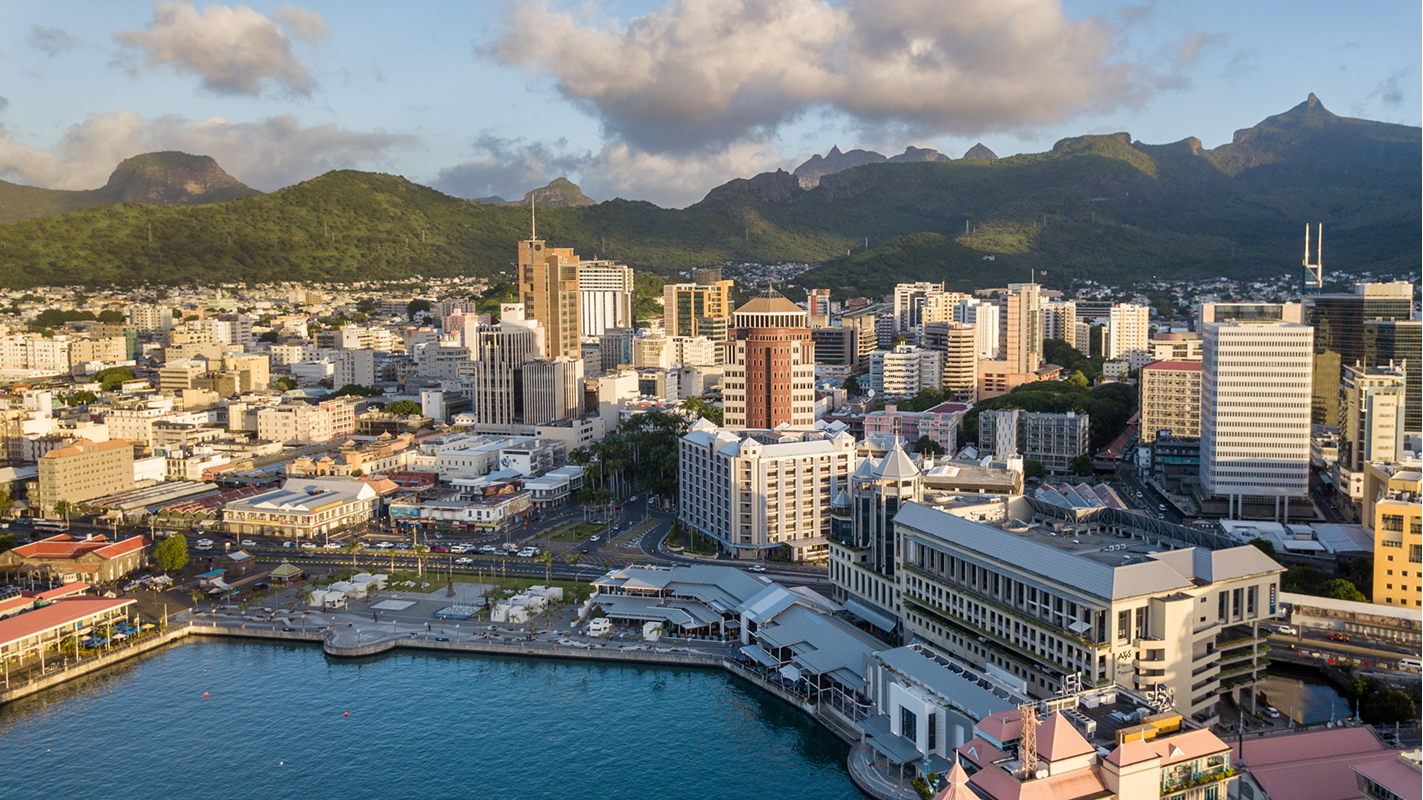
Once known primarily for its pris-tine beaches and luxury resorts,Mauritius has, over the past three decades, steadily posi-tioned itself as one of Africa’s most dynamic hubs for investment, finance and high-value tourism, driven by long-term policy vision, strategic partnerships and a rapidly evol-ving financial services ecosystem. Today, the island state is consolidating its role as a leading international financial centre at the intersection of Africa, the Gulf and Asia
At the centre of this development lies Vision 2050, a bold national roadmap unveiled by H.E. Dr Navinchandra Ramgoolam, Prime Minister of Mauritius. Framed as a living manifesto rather than a static plan, Vision 2050 responds to a global “polycrisis” marked by geopolitical tensions, technological disruption and climate change. Its ambition is to position Mauritius among advanced economies by mid-century through agile governance, innovation and inclusive growth.
The strategy prioritises future-facing sectors such as artificial intelligence, digital services, fintech, medical science, renewable energy and the blue and green economies. High-value tourism, innovation-driven education and skills development are reinforced by commitments to social inclusion, climate resilience, food and health security, and fiscal sustainability. The underlying message is that economic progress must be competitive, resilient and widely shared.
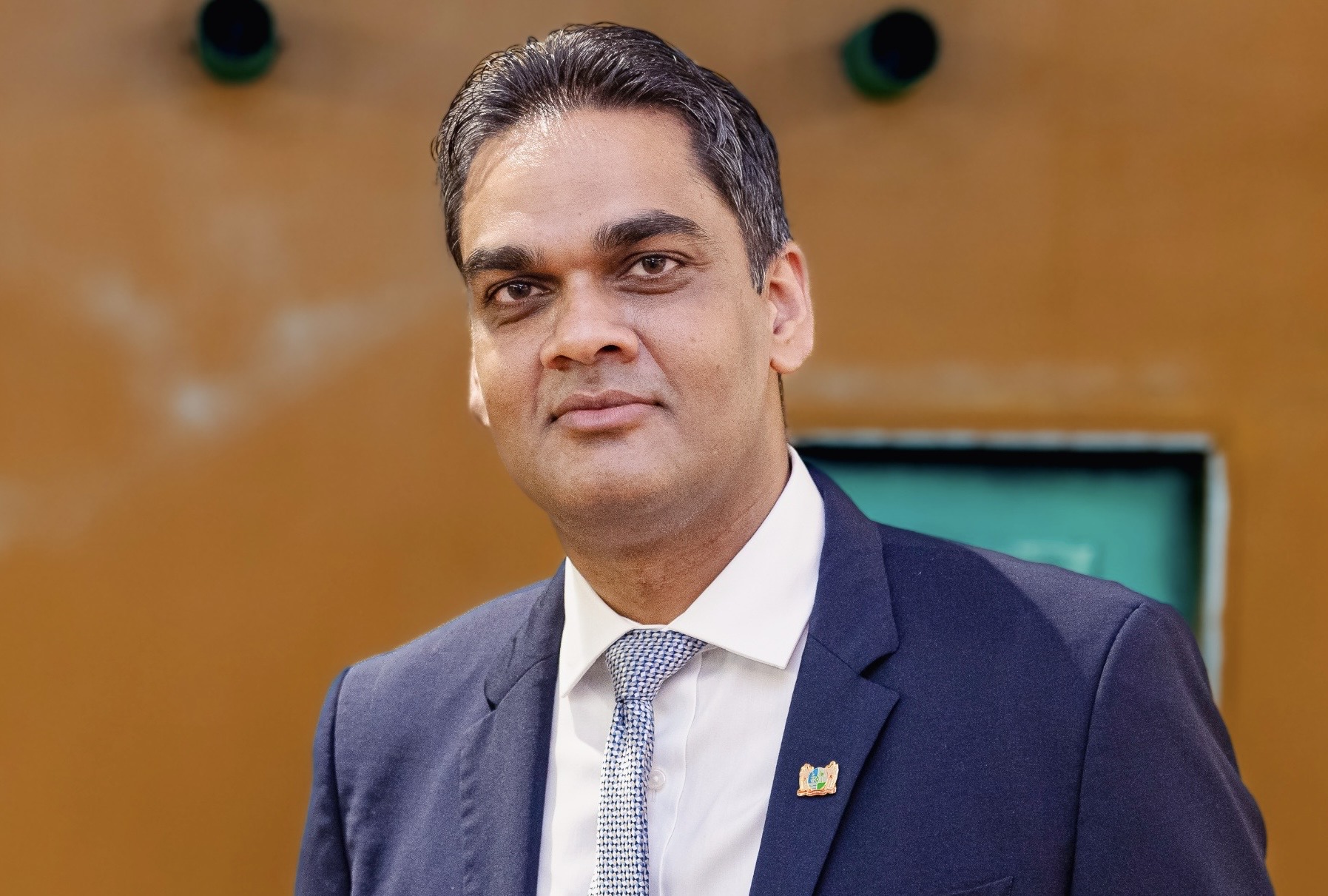
Junior Minister of Finance Hon. Dhaneshwar Damry echoes this emphasis on inclusion and trust, describing jobs and inclusive growth as the government’s two overriding objectives. “The foremost currency in any economy is trust,” he notes, highlighting efforts to restore macro-fiscal stability, strengthen governance and pursue structural reforms focused on innovation, competitiveness and skills. He adds that Mauritius’s investment-grade financial centre status is not only about serving as a gateway for capital, but about enabling job creation and inclusive growth across Africa. “Our success is linked to Africa’s success,” he says.
Tourism remains central to this narrative, even as the country diversifies. In 2025, Mauritius welcomed 1,44 million visitors, a 3.9 per cent increase year on year. Tourism revenues reached $2.16 billion, underscoring the sector’s continued importance.
Increasingly, the focus is on higher-value segments including luxury hospitality, wellness, eco-tourism and integrated resort developments aligned with sustainability goals.
Mauritius’s long-term vision is reinforced by concrete international partnerships, most notably the Comprehensive Economic Partnership Agreement (CEPA) with the United Arab Emirates, which came into force on 1 April 2025. As the UAE’s first CEPA with an African country, the agreement marks a strategic milestone in Gulf–Africa relations. It eliminates or reduces tariffs on more than 97 per cent of traded goods, while opening services markets and strengthening cooperation in investment, digital trade, logistics, tourism and technology. The agreement is further supported by Mauritius’s regional and continental ties. As a member of SADC, COMESA and the African Union, the country is well positioned to leverage regional markets and investment flows. Its alignment with the AfCFTA further expands opportunities, potentially allowing UAE–Mauritius trade to reach a pan-African market of over 1.3 billion people, subject to implementation schedules and sector rules.
For UAE and Gulf investors, the CEPA enhances Mauritius role as a stable, well-regulated platform for accessing African markets. For Mauritius, it deepens engagement with one of the world’s most dynamic commercial hubs.
Financial services further anchor Mauritius’s role as a regional and global connector. The country has evolved into one of Africa’s most sophisticated international financial centres, underpinned by a robust legal framework, a transparent tax regime, and a strategic time zone bridging Asia, Africa and Europe. Ongoing reforms, digitalisation and a strong focus on compliance continue to safeguard investor confidence.
Together, Vision 2050, the UAE CEPA and sustained reforms across finance and tourism illustrate how Mauritius is redefining itself beyond its traditional identity. As this report will show, the island is not only an exceptional destination to visit, but an increasingly compelling place to invest, structure capital and build long-term partnerships linking the Gulf, Africa and global markets.


.png)

.jpg)
%20(1).jpg)
.jpg)
.jpg)
.jpg)
.jpg)

%20(1).jpg)
.jpg)


.jpg)
.jpg)


.jpg)

.jpg)






.jpg)


.png)

.jpg)


.png)


